Configuración de Modelos de NegocioBusiness Models Config
Rediseñé el flujo de creación y edición de modelos de negocio para que el usuario pudiera construir y asociar todo sin salir del proceso.I redesigned the create-and-edit flow for business models so the user could build and link everything without leaving the process.
El retoThe challenge
Un modelo de negocio es la plantilla que define cómo una empresa factura: qué documento emite, contra qué cuenta contable, con qué conceptos de ingreso, qué impuestos aplica, qué anticipos, retegarantías y descuentos. Es la pieza que hace funcionar todo lo demás del módulo.A business model is the template that defines how a company invoices: which document it issues, against which ledger account, with which income concepts, which taxes, advances, warranty retentions and discounts apply. It is the piece that makes everything else in the module work.
El problema no era que el flujo fuera largo — es intrínsecamente largo. El problema era que estaba roto por dentro: si al configurar un modelo el usuario necesitaba un concepto de ingreso que aún no existía, tenía que abandonar la creación, ir a crearlo en otra pantalla y volver a empezar. Cada elemento faltante era un retroceso.The problem was not that the flow was long — it is intrinsically long. The problem was that it was broken from the inside: if while configuring a model the user needed an income concept that did not exist yet, they had to abandon the creation, go build it on another screen and start over. Every missing element was a step backwards.
A eso se sumaba que la primera pantalla no mostraba información relevante y que los campos de identificación no dejaban claro qué contenía cada modelo.On top of that, the first screen showed no relevant information and the identification fields never made clear what each model contained.
El procesoThe process
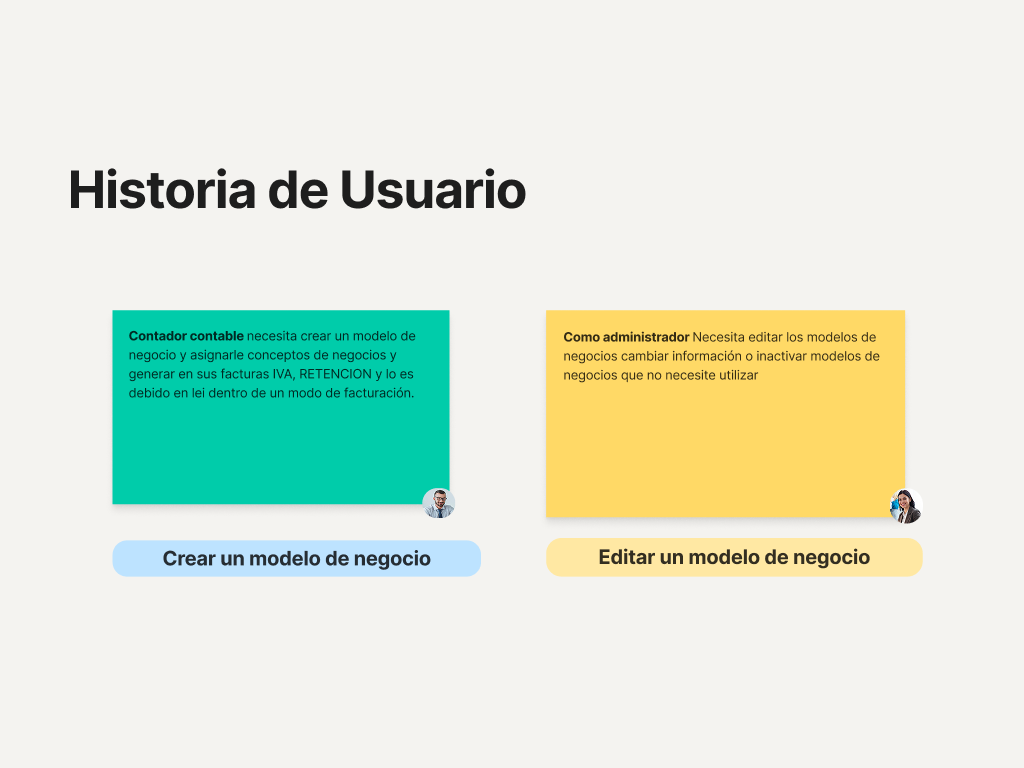
Trabajé el caso con la estructura Descubrimiento → Entendimiento → Objetivo → Historias de usuario, documentada en un board colaborativo.I ran the case as Discovery → Understanding → Goal → User stories, documented on a collaborative board.
DescubrimientoDiscovery
Definí primero qué permite realmente la funcionalidad y cuál es el rol del usuario frente a ella. La pregunta que abrió el caso fue: "según lo que permite este flujo, ¿tienes algún comentario a nivel de usuario?" — y la respuesta fue el hallazgo central: los usuarios tienen que salir y volver a entrar para agregar pasos internos, y eso genera retroceso.First I defined what the feature actually allows and what the user's role is within it. The question that opened the case was: "given what this flow allows, do you have any comment at the user level?" — and the answer was the central finding: users have to exit and re-enter to add internal steps, and that creates backtracking.
EntendimientoUnderstanding
Consolidé los problemas en tres pain points:I consolidated the problems into three pain points:
- Salir del flujo para crear o asignar cosas por dentro.Leaving the flow to create or assign things inside it.
- No ver información relevante en la primera pantalla.No relevant information on the first screen.
- Organización confusa del proceso de creación y asignación.Confusing organisation of the create-and-assign process.
Insights
Dos, y cada uno se convirtió en una decisión estructural: organizar la creación en un paso a paso explícito, y permitir asignar elementos desde la misma creación sin interrumpir al usuario.Two, and each became a structural decision: organise the creation as an explicit step-by-step, and allow assigning elements from within the creation itself without interrupting the user.
Flujos y criterios de aceptaciónFlows and acceptance criteria
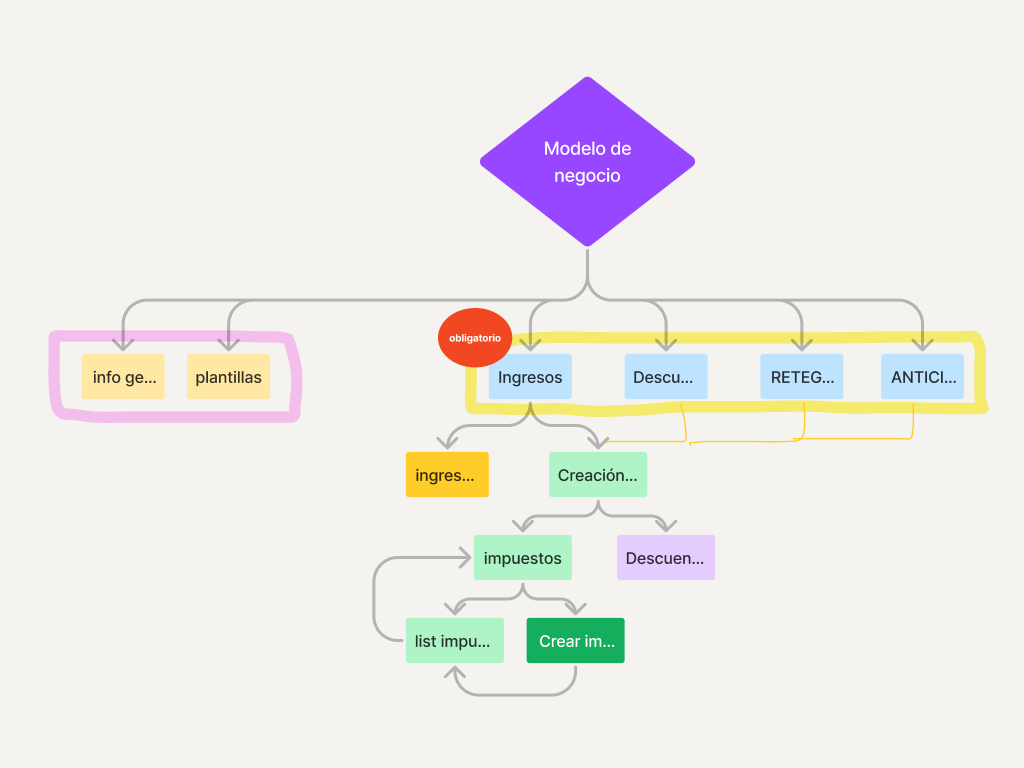
Mapeé el flujo completo de creación y edición con sus ramas de decisión (¿existe el concepto? → asociar / crear → ¿configurar impuestos? → …) para verificar que ninguna rama obligara a salir del proceso. Cerré con criterios explícitos por historia: crear tipos de modelos sin interrupciones, editar e inactivar modelos.I mapped the full create-and-edit flow with its decision branches (does the concept exist? → link / create → configure taxes? → …) to verify that no branch forced the user out of the process. I closed with explicit criteria per story: create model types without interruptions, edit and deactivate models.
De la forma
a la funciónFrom form
to function
El estado del botón es la regla de negocio hecha visible.The state of the button is the business rule made visible.
El stepper lateral persistenteThe persistent side stepper
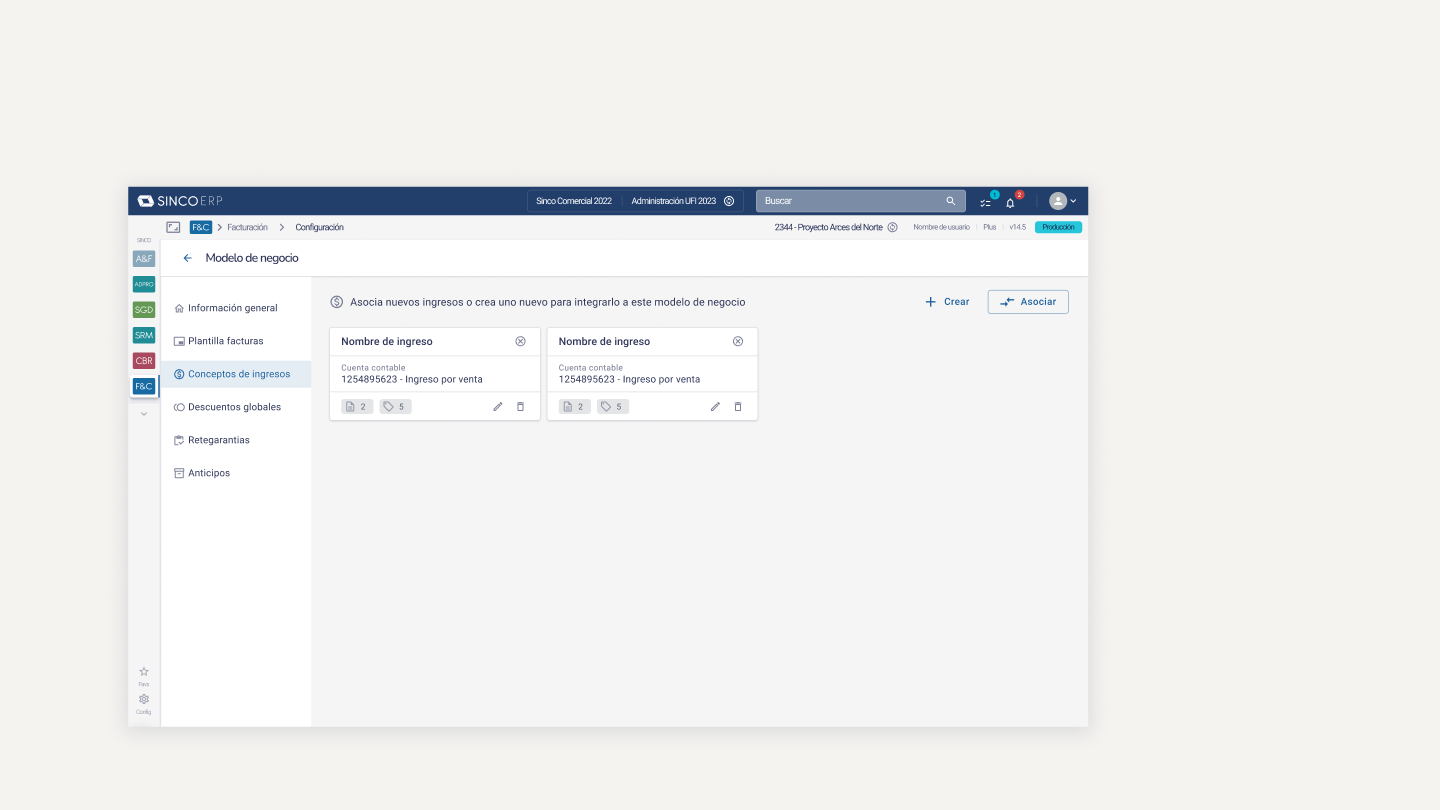
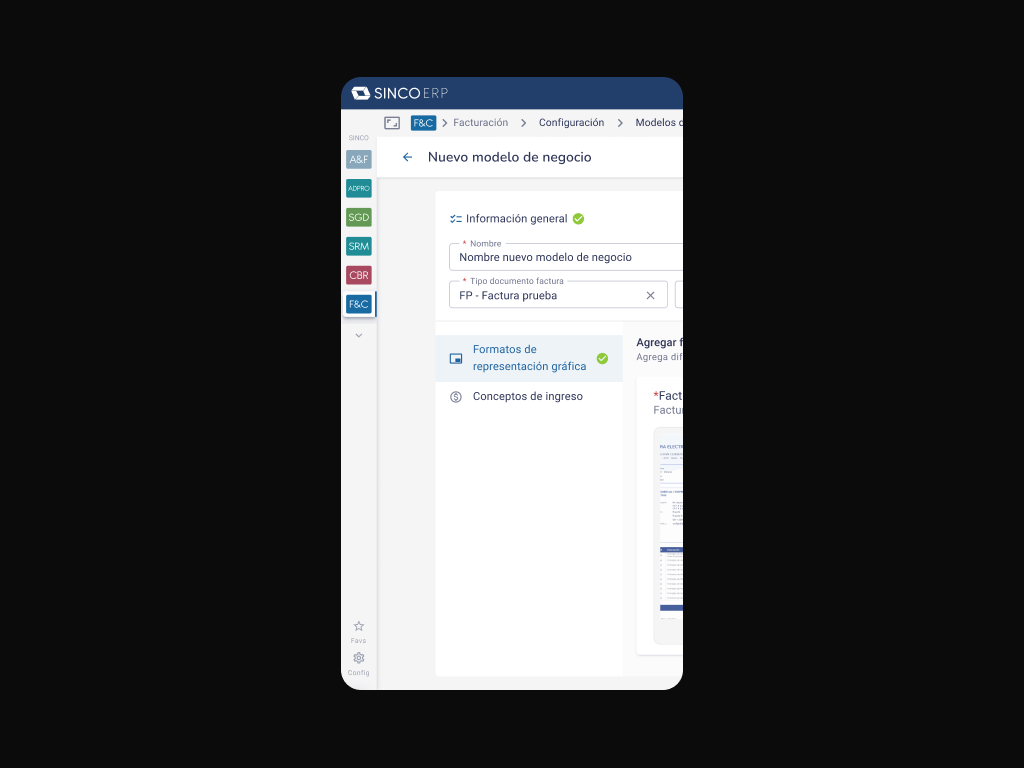
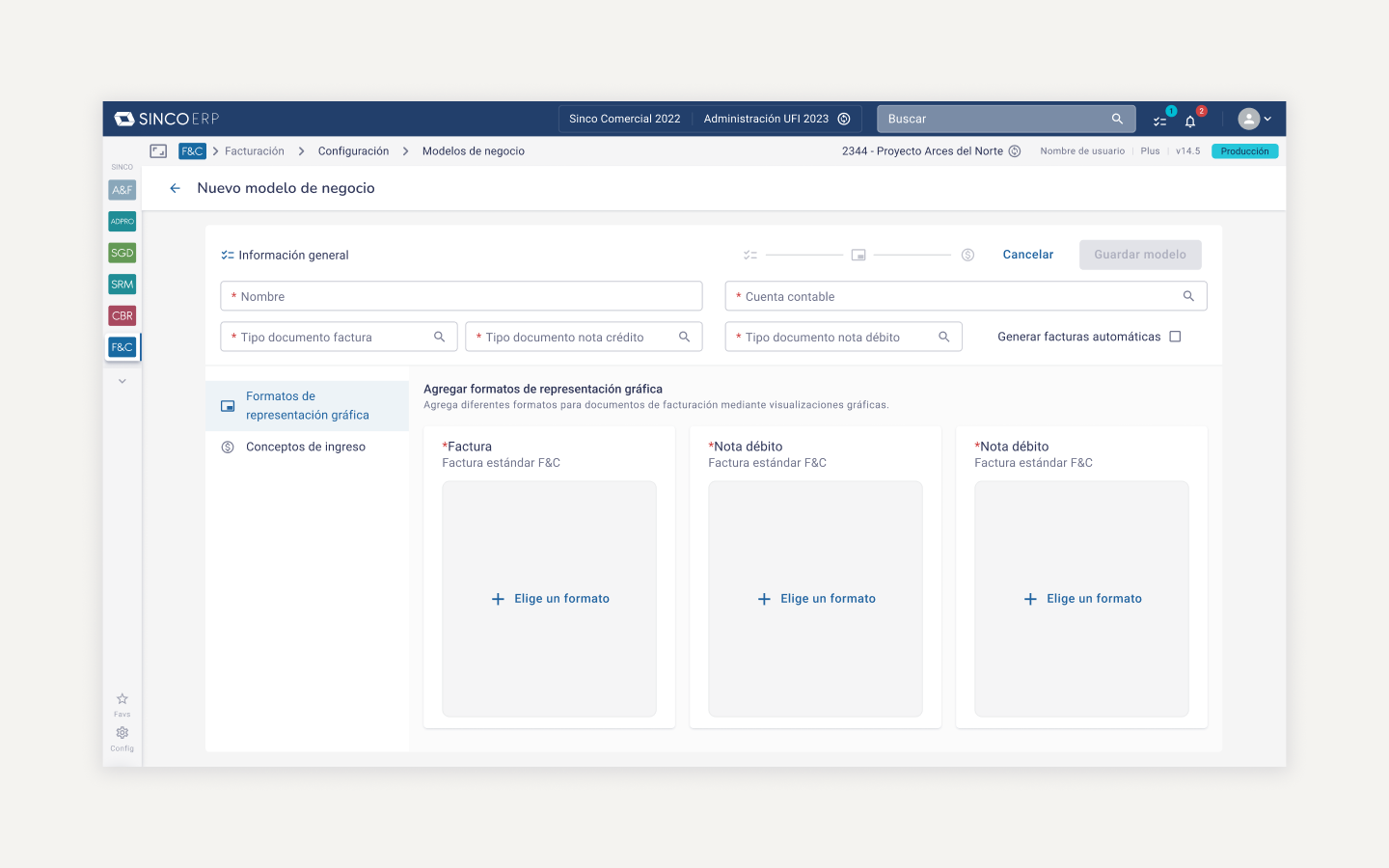
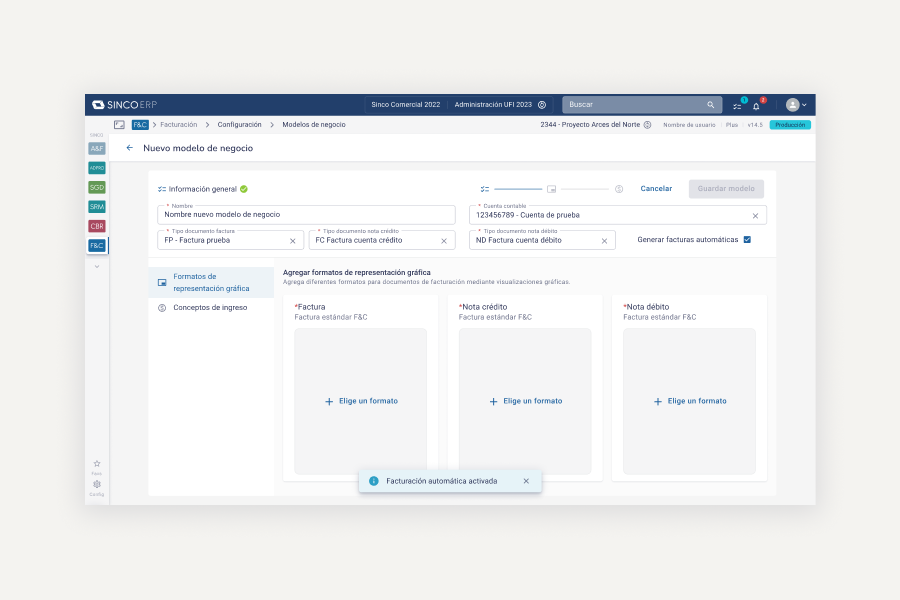
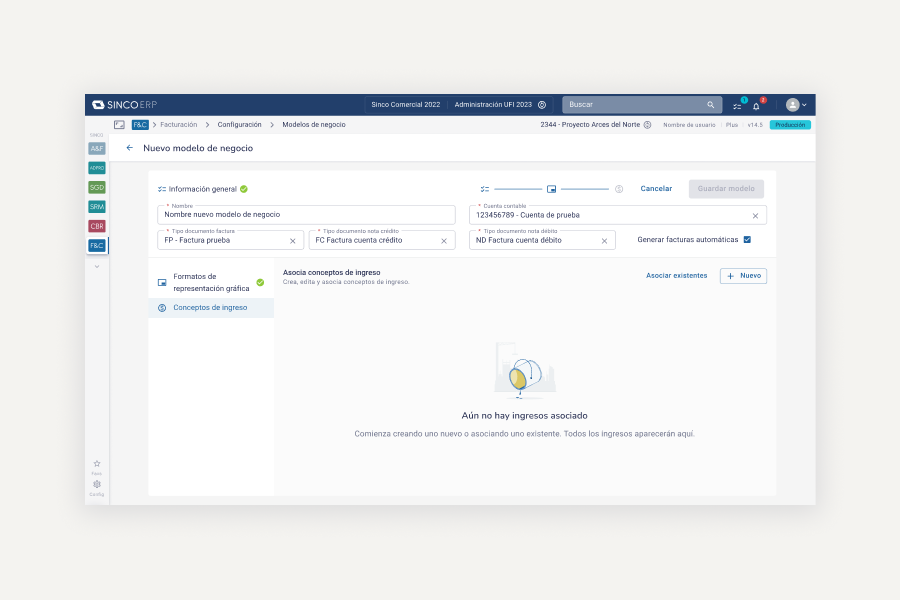
Tres pasos siempre visibles a la izquierda —Información general, Formatos, Conceptos de ingreso— cada uno con un check verde al completarse y el progreso replicado en la cabecera. La forma comunica tres cosas a la vez: cuántos pasos hay, en cuál estás y cuáles ya validaste. "Guardar modelo" permanece deshabilitado hasta que el progreso lo permite: no hace falta un mensaje de error.Three steps always visible on the left —General information, Formats, Income concepts— each with a green check on completion and the progress mirrored in the header. The form communicates three things at once: how many steps there are, where you are, and which ones you validated. "Save model" stays disabled until progress allows it: no error message needed.
La creación inlineInline creation
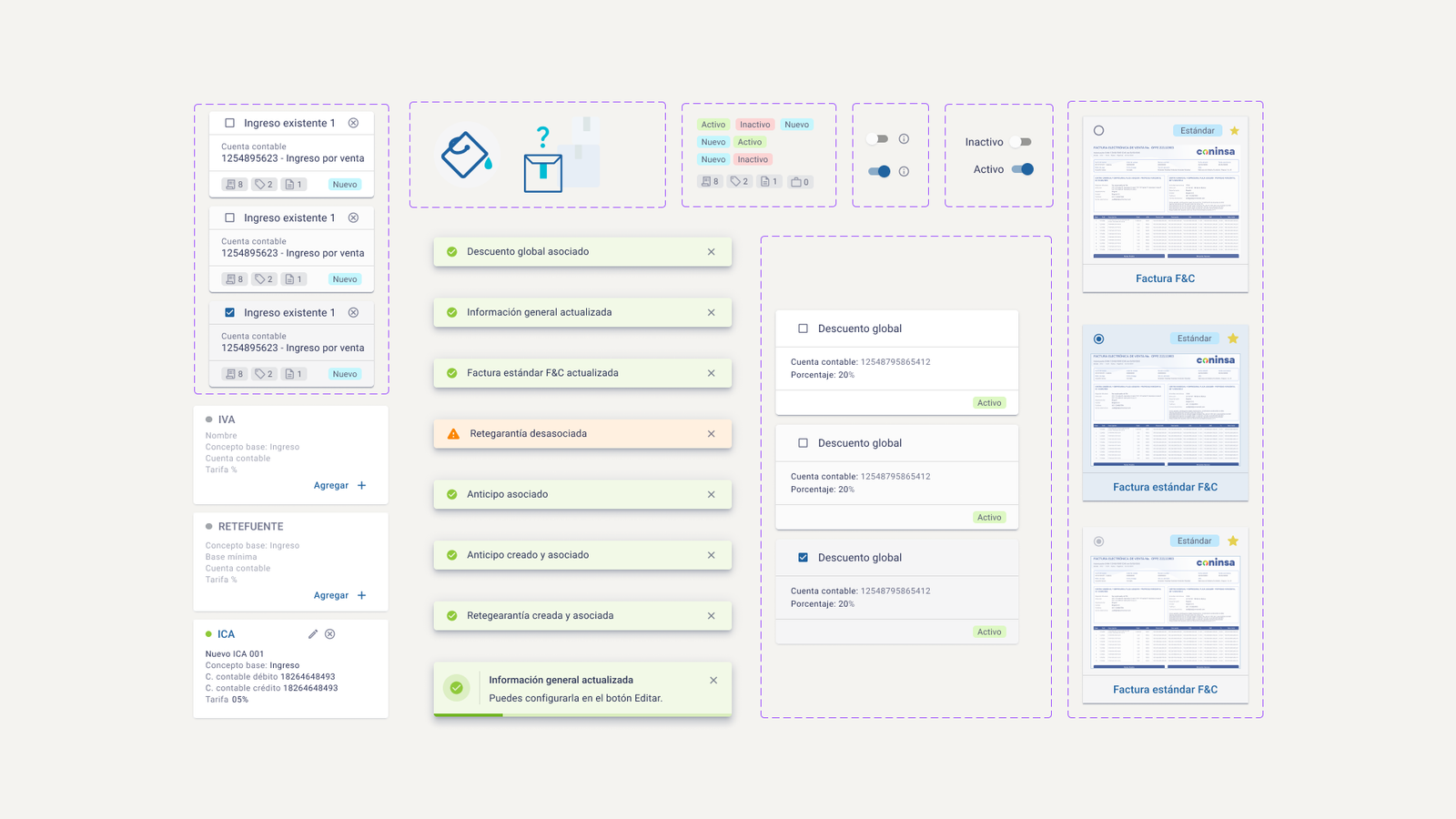
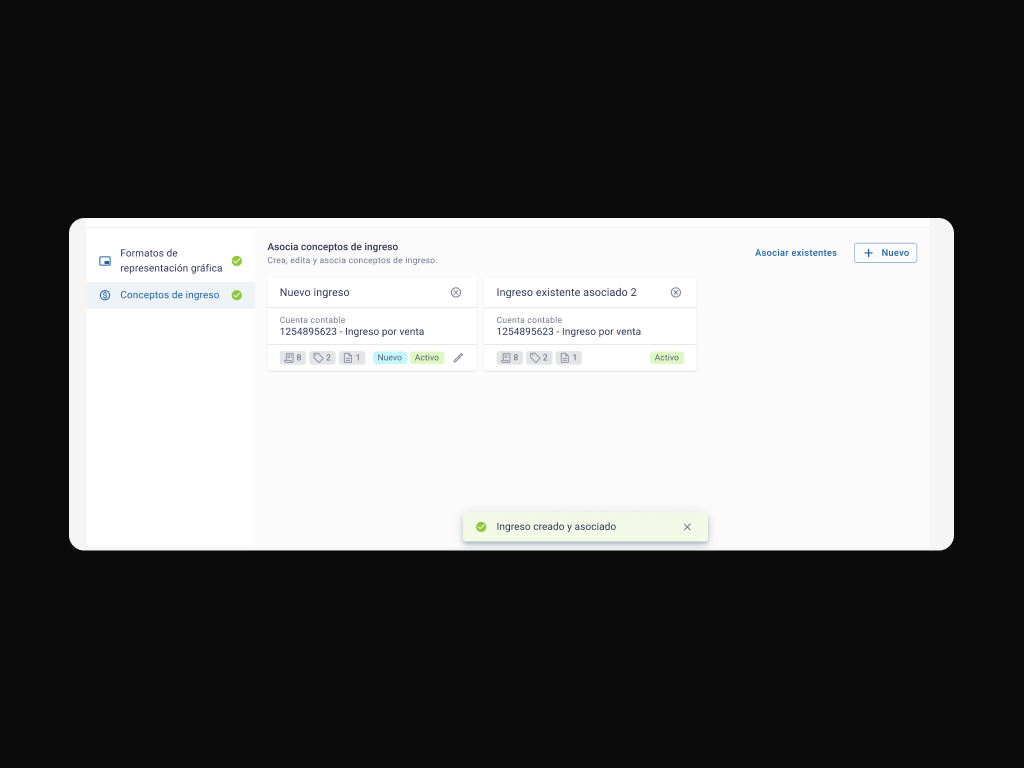
En el paso de conceptos conviven dos acciones: "Asociar existentes" (enlace, secundario) y "+ Nuevo" (botón, primario). Si el elemento existe lo asocias, si no existe lo creas ahí mismo. El resultado aparece como tarjeta en la misma vista, confirmado por un toast discreto. El usuario nunca pierde el contexto de lo que estaba construyendo.In the concepts step two actions coexist: "Link existing" (a secondary link) and "+ New" (a primary button). If the element exists you link it; if it doesn't, you create it right there. The result shows up as a card in the same view, confirmed by a quiet toast. The user never loses the context of what they were building.
Las tarjetas como resumen legibleCards as a legible summary
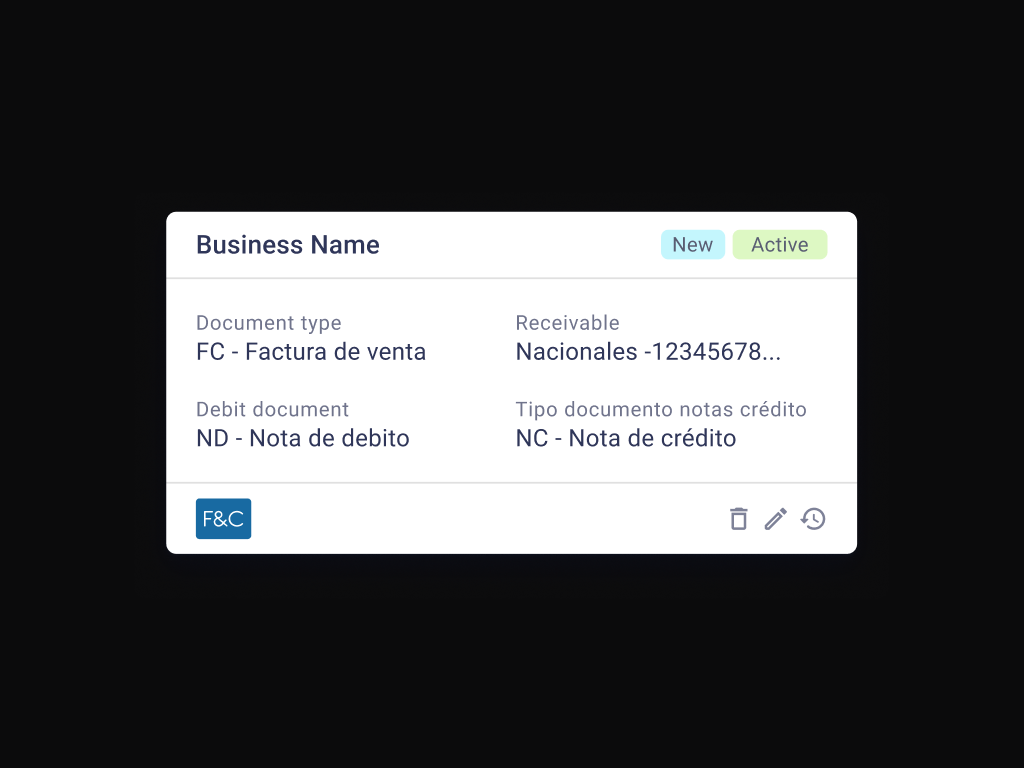
El listado dejó de ser una tabla de nombres. Cada tarjeta muestra estado, tipo de documento, cuenta por cobrar y tipos de nota débito y crédito — los cuatro datos que distinguen un modelo de otro sin abrirlo. Las acciones (editar, eliminar, auditoría) viven al pie, discretas.The list stopped being a table of names. Each card shows status, document type, receivable account and debit/credit note types — the four data points that tell one model from another without opening it. Actions (edit, delete, audit) sit quietly at the foot.
El selector visual de formatosThe visual format picker
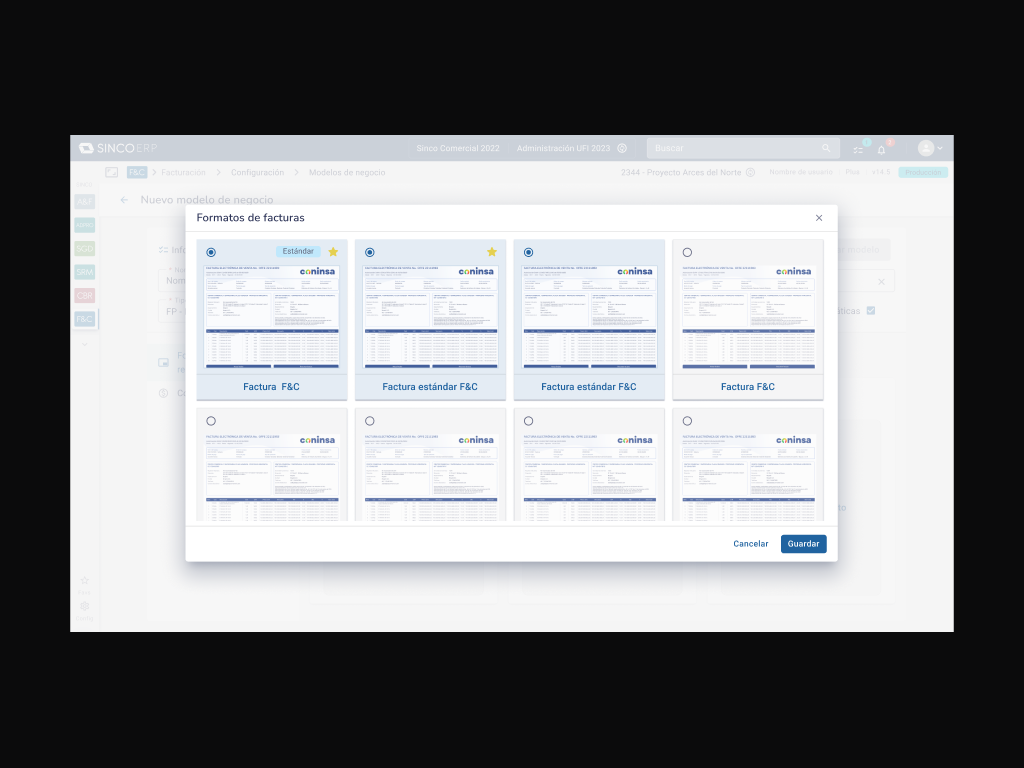
Elegir el formato de la factura se resolvió con previsualizaciones reales del documento en una retícula, con marca de "Estándar" y favorito. Se elige viendo, no leyendo un nombre de archivo. Es una decisión que viene del oficio gráfico: cuando el objeto de la decisión es visual, la interfaz debe serlo también.Choosing the invoice format was solved with real document previews in a grid, marked "Standard" and favourite. You choose by looking, not by reading a file name. That decision comes from the graphic craft: when the object of the decision is visual, the interface should be too.
La soluciónThe solution
Un flujo de tres pasos que se puede completar de principio a fin sin abandonar la pantalla.A three-step flow that can be completed end to end without leaving the screen.
El resultadoThe result
El flujo dejó de tener interrupciones: crear o asociar un concepto ya no obliga a abandonar la creación del modelo.The flow stopped having interruptions: creating or linking a concept no longer forces you to abandon the model you are building.
La información necesaria para identificar un modelo quedó disponible en el listado, sin abrir el detalle.The information needed to identify a model is now available in the list, without opening the detail.
El paso a paso explícito redujo la ambigüedad sobre qué falta para poder guardar — el usuario deja de descubrir requisitos por ensayo y error.The explicit step-by-step reduced ambiguity about what is missing before saving — the user stops discovering requirements by trial and error.
Nota de honestidad: este flujo se entregó como rediseño validado con negocio y consultoría; no se midió con métricas de producto en producción durante mi participación.A note on honesty: this flow was delivered as a redesign validated with business and consulting; it was not measured with production product metrics during my involvement.